80th anniversary of the Battle of Arnhem: Each year, commemorations of the Battle of Arnhem are held, but every five years, there are numerous ceremonies to pay tribute to the soldiers who fought here in September 1944. The Battle of Arnhem was part of the Allied Operation Market Garden, one of the military operations to liberate the Netherlands. After the successful Western Allied invasion of Normandy, the Allies hoped to end the war before the end of 1944. The goal was to take bridges in the southern part of the Netherlands and allow a rapid advance deep into Germany. Operation Market Garden consisted of two parts: Operation Garden involved the advance of Allied ground troops from the Belgian border to the Rhine bridge in Arnhem; Operation Market was a drop of roughly 35,000 airborne troops. They had to take bridges and hold them until the ground troops arrived. The Allies managed to capture all the bridges between the Belgian border and Nijmegen. Only the 2nd Parachute Battalion, led by Lieutenant Colonel John Frost, managed to reach and capture the Rhine bridge at Arnhem. After nine days, the airborne troops at Arnhem had to surrender because the ground troops were unable to reach them. The southern part of the Netherlands was liberated, while the northern part remained under Nazi-German occupation until 5 May 1945.
The Battle of Arnhem is remembered each year at a number of locations such as Ginkel Heath (Ginkelse Heide), the Airborne Museum and the impressive Airborne Cemetery in Oosterbeek, the Airborne Museum at the Bridge in Arnhem, and in the small village of Driel, where the Polish troops landed. To commemorate the 80th anniversary of the Battle of Arnhem, hundreds of paratroopers were dropped over Ginkel Heath. In our own Ford Jeep, together with numerous other WWII army vehicles and their owners, we attended the airborne landings on the Ginkel Heath. We also participated in the Race to the Bridge; a convoy of more than 200 authentic WWII army vehicles followed the route Lieutenant Colonel John Frost and his airborne troops took in 1944 from the landing zones to the Rhine bridge in Arnhem. The bridge is now called the John Frost Bridge. The Race to the Bridge ended in Oosterbeek, near the Airborne Museum.
The most unusual paratrooper at Arnhem was Myrtle, the parachick. Discover her story here.
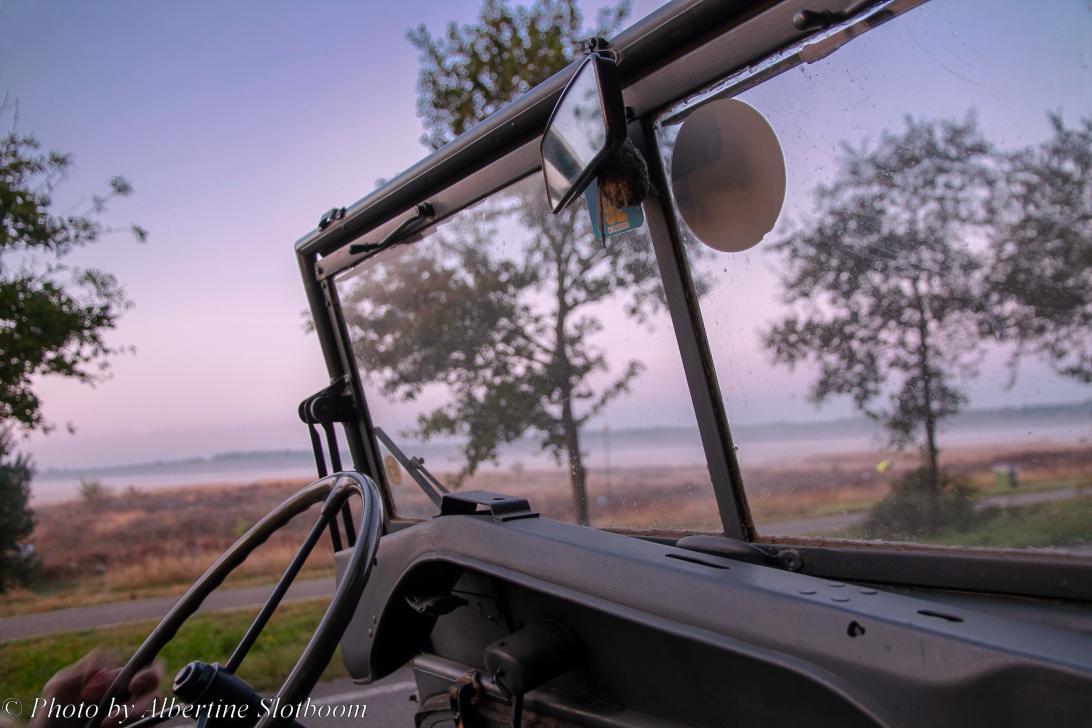
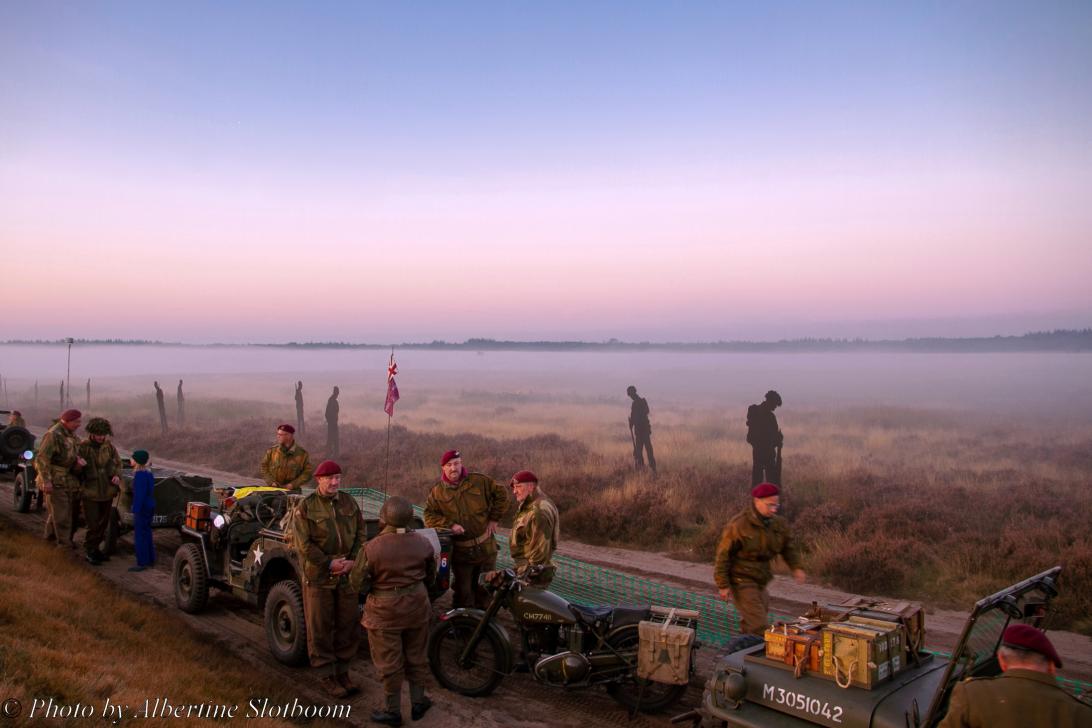
The 80th anniversary of the Battle of Arnhem: It was still dark and mist swirled over the fields when we drove in our own Ford Jeep to Ginkel Heath. In September 1944, this was one of the primary drop zones for the airborne troops during Operation Market Garden – a major Allied military operation during WWII. The Battle of Arnhem was a vital part of this impressive military operation.
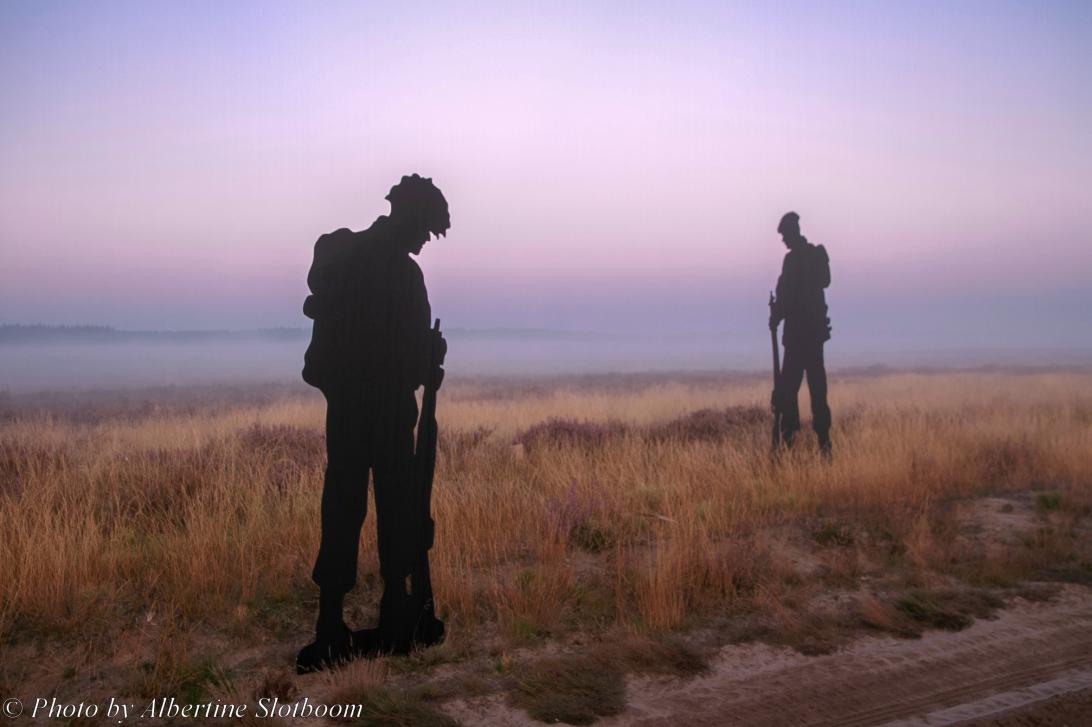
The 80th anniversary of the Battle of Arnhem: It was still dark and mist swirled over the fields when we drove in our own Ford Jeep to Ginkel Heath. In September 1944, this was one of the primary drop zones for the airborne troops during Operation Market Garden – a major Allied military operation during WWII. The Battle of Arnhem was a vital part of this impressive military operation.
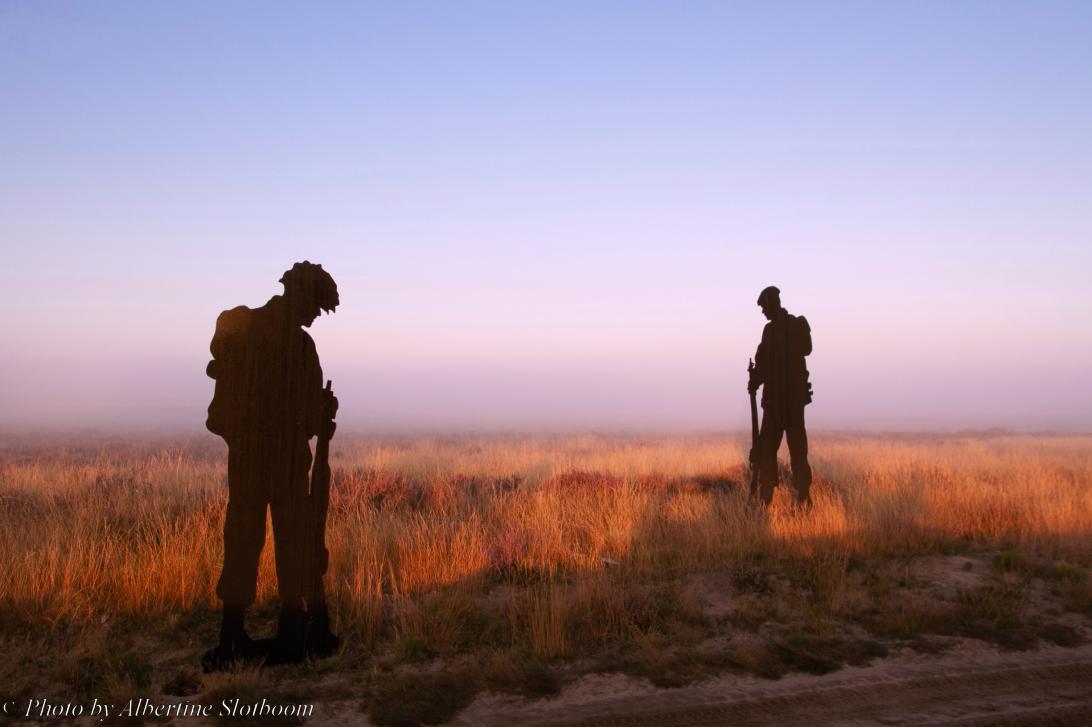
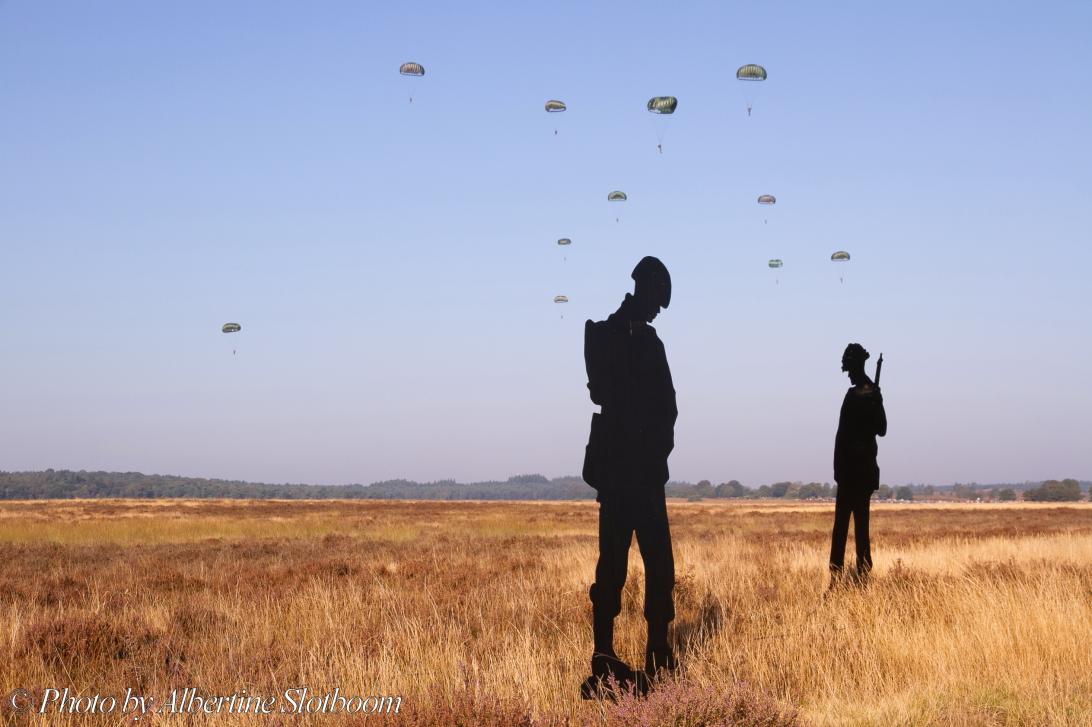
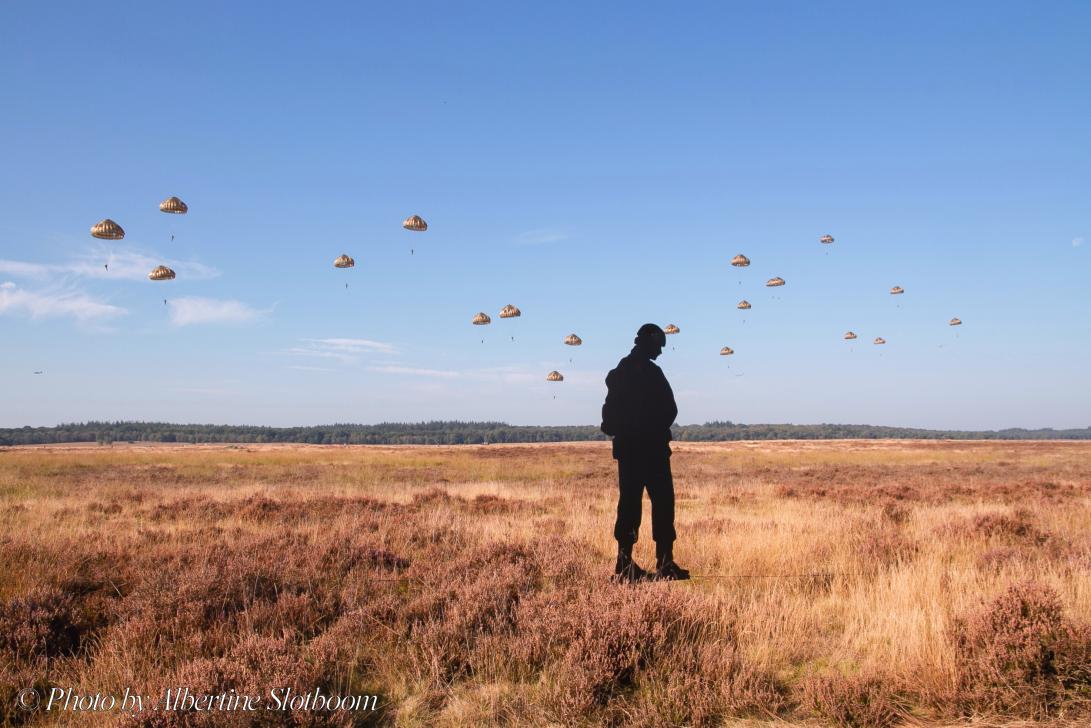
The 80th anniversary of the Battle of Arnhem: The imposing installation 'The Veterans Tribute' by Standing with Giants on Ginkel Heath. The almost two-metre-tall silhouettes commemorate the bravery and sacrifice of the soldiers who participated in Operation Market Garden. The installation consists of 108 lifelike metal silhouettes of soldiers, temporarily placed along the edge of the drop zone on Ginkel Heath.

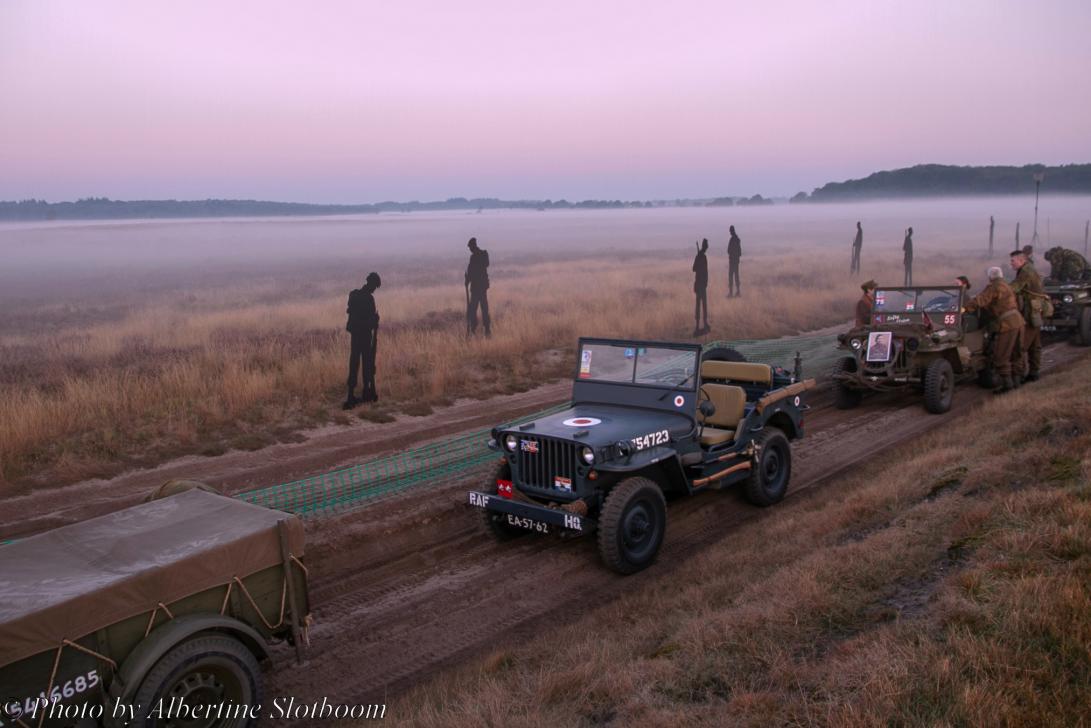
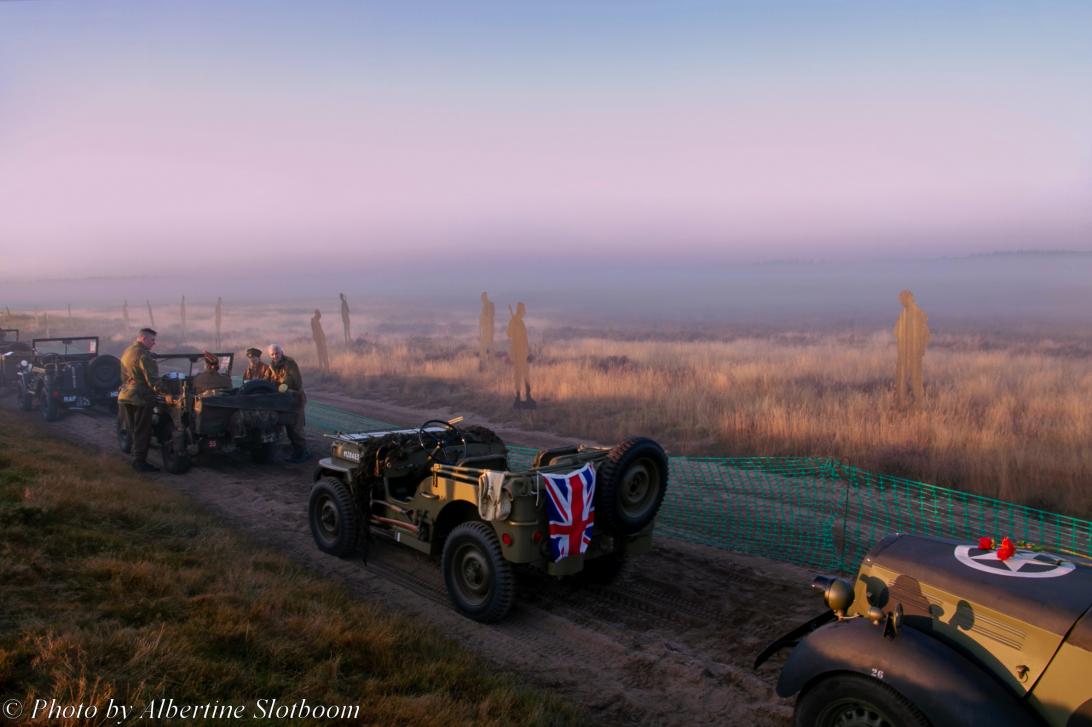
The 80th anniversary of the Battle of Arnhem: Several WWII military vehicles on a dirt track along Ginkel Heath. We arrived at Ginkel Heath before sunrise. Together with other original historic WWII military vehicles, our own 1942 Ford Jeep had to be positioned along the edge of this iconic heath. In the background, surrounded by morning mist, stands the Standing with Giants art installation 'The Veterans Tribute'.

The 80th anniversary of the Battle of Arnhem: The sun rises over Ginkel Heath and the imposing installation 'The Veterans Tribute', created by Standing with Giants. Standing with Giants is a charity, which creates large-scale outdoor memorial art installations, handmade from recycled materials by the British artist Dan Barton and a group of volunteers. For the 80th anniversary of D-Day, Standing with Giants created the art installation 'For Your Tomorrow'.

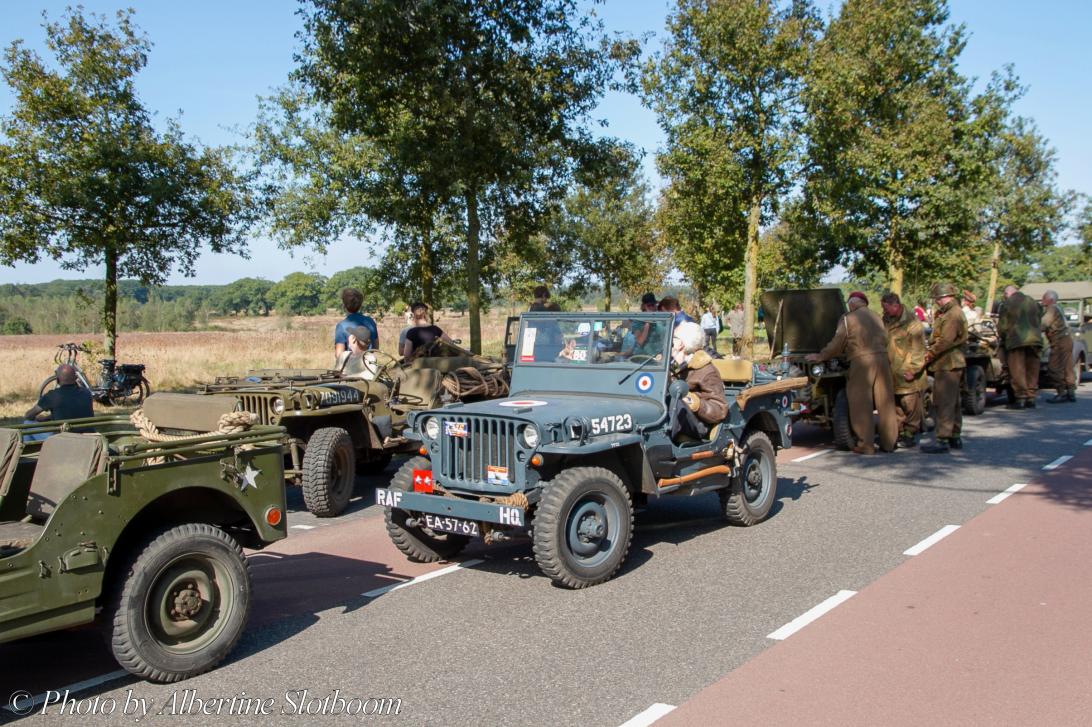
The 80th anniversary of the Battle of Arnhem: Original military vehicles that were used during WWII were lined up along the edge of Ginkel Heath. In the background, the dark silhouettes of the Standing with Giants art installation 'The Veterans Tribute', which were slowly emerging from the early morning mist, created a mysterious landscape. During the commemoration of the Battle of Arnhem, there were more than a hundred WWII vehicles on Ginkel Heath.

The 80th anniversary of the Battle of Arnhem: Jeeps at Ginkel Heath. During WWII, the Allied Forces used a huge number of Jeeps. Almost 650,000 Jeeps were built in American factories between 1941 and 1945. Of these, 360,000 Willys MB Jeeps were produced, along with 270,000 Ford GPW Jeeps and a number of Ford GP Jeeps and Ford GPA Jeeps. We own one of these Jeeps, a 1942 Ford GPW Jeep.

The 80th anniversary of the Battle of Arnhem: Remembering the battle 80 years on. More than 700 paratroopers from eight NATO member countries landed on Ginkel Heath – the drop zone Y where the 4th Parachute Brigade, under the command of Brigadier John Hackett, landed on the afternoon of 18 September 1944. Brigadier Hackett was severely wounded during the Battle of Arnhem; however, he was hidden by Dutch resistance members and survived the war.

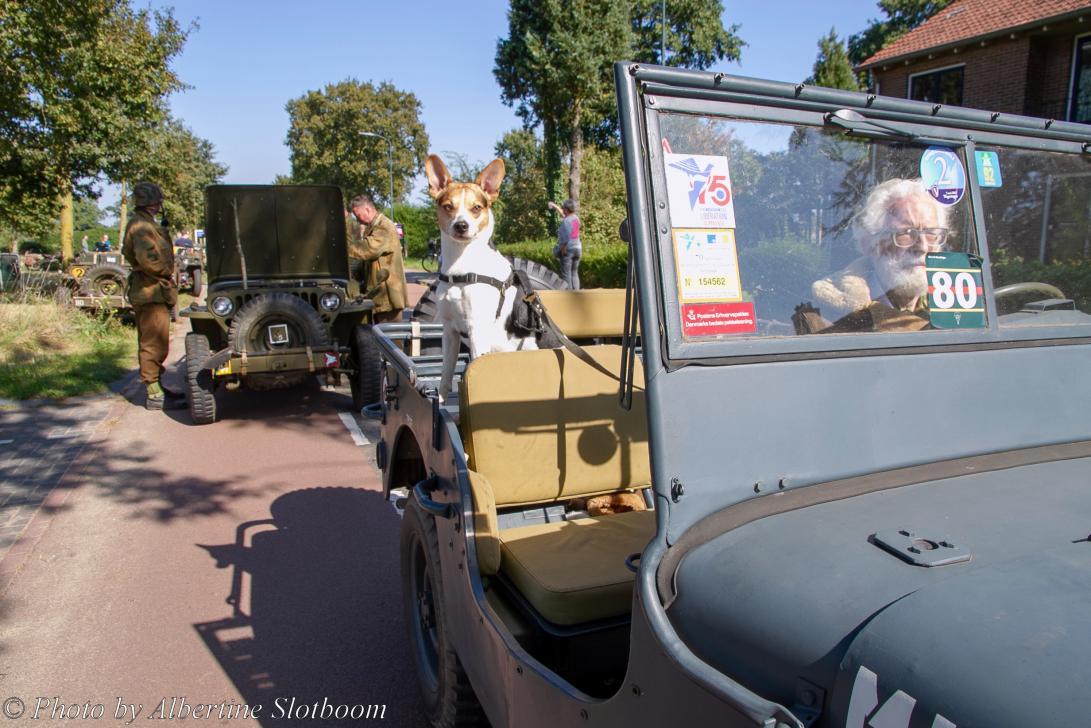
The 80th anniversary of the Battle of Arnhem: Our dog, Jussi, is keeping watch from the back seat of our Jeep. The most unusual paratrooper of the British 1st Airborne Division was probably Myrtle the Parachick, a brave little hen who actually parachuted onto Ginkel Heath with the 10th Battalion in September 1944. She survived the jump, but, sadly, did not survive the battle. Poor hen.

The 80th anniversary of the Battle of Arnhem: A mass parachute drop over Ginkel Heath to commemorate this heroic and dramatic event in the history of Arnhem and the surrounding area. An impressive memorial service was held at the Airborne Monument on Ginkel Heath. King Willem-Alexander of the Netherlands also attended the service and laid a memorial wreath. Twelve Market Garden veterans who attended the service were also honoured.

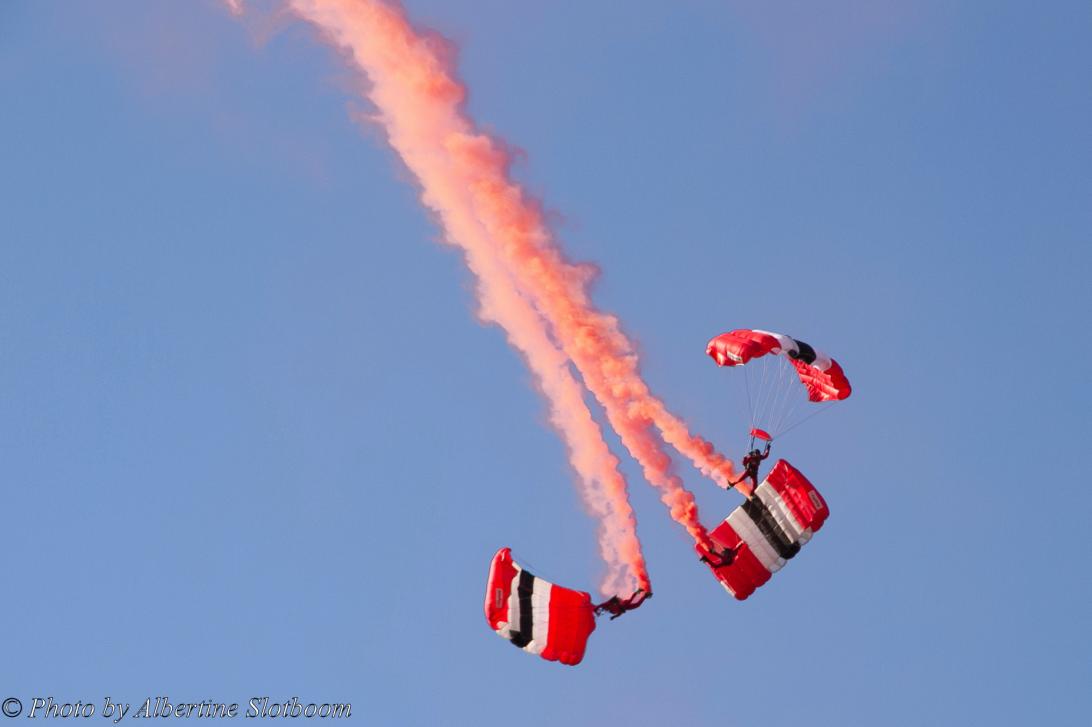
The 80th anniversary of the Battle of Arnhem: The spectacular sight of the Red Devils over Ginkel Heath. The famous Red Devils Parachute Display Team is an elite unit within the British Army's Parachute Regiment. Their members are highly skilled paratroopers. This daring team – commonly known as the Red Devils – were established in 1964 as a free-fall parachute display team and they have been the official British Army Parachute Display Team since 1979.

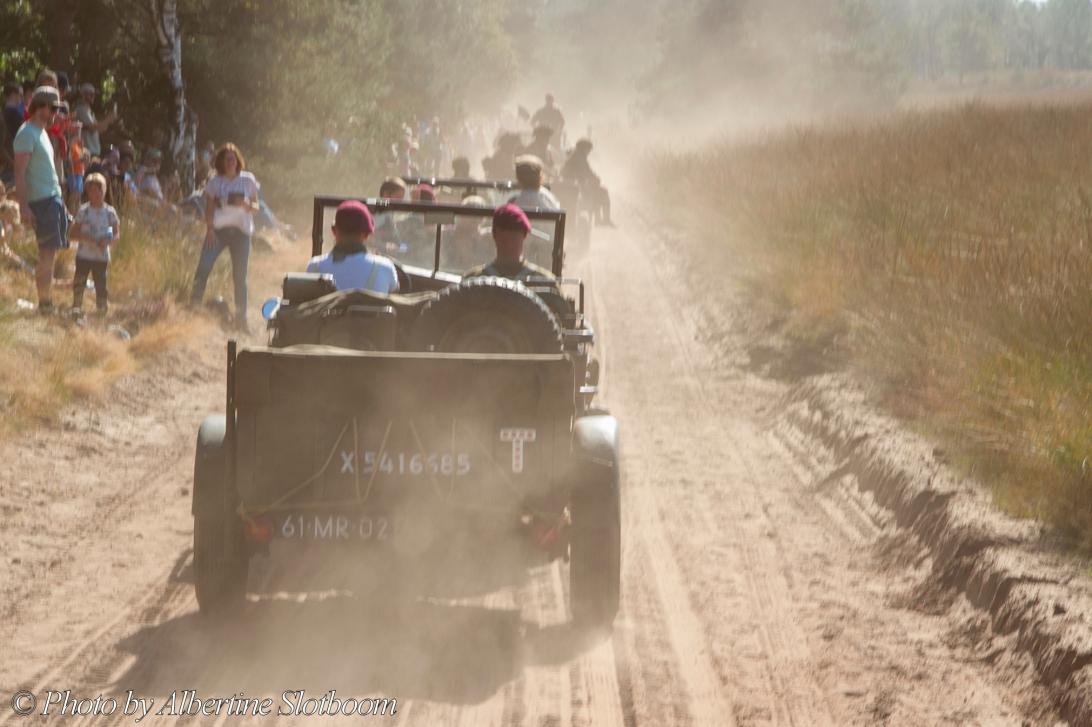
The 80th anniversary of the Battle of Arnhem: A convoy of WWII Jeeps driving on the dusty sand roads of Ginkel Heath. Following the parachute drop and the commemoration service at the Airborne Monument, we headed to the former landing zone X in Renkum. On 17 September 1944, the 2nd Parachute Battalion under the command of Lieutenant-Colonel John Frost landed on Renkum Heath near the village of Renkum – the historic starting point for the Race to the Bridge 2024.

The 80th anniversary of the Battle of Arnhem: Our dog Jussi sitting in the back seat of our own Ford GPW Jeep. The Telefoonweg near Renkum Heath is the starting point of the Race to the Bridge. The Battle of Arnhem started on 17 September 1944, when the British First Airborne Division landed on Renkum Heath. Out of the entire division, only the battalion led by John Frost managed to reach the Rhine bridge in Arnhem. The Race to the Bridge follows largely the route this battalion took to the bridge.

The 80th anniversary of the Battle of Arnhem: Our own Ford GPW Jeep near the Renkum Heath. The Jeep landed on Juno Beach in June 1944, shortly after D-Day. This veteran vehicle was used during the liberation of France, Belgium and the Netherlands. Decades later, this Jeep has taken us on numerous road trips across the Netherlands and through various European countries, including Denmark, France, England, Scotland, Wales, Liechtenstein and Switzerland.

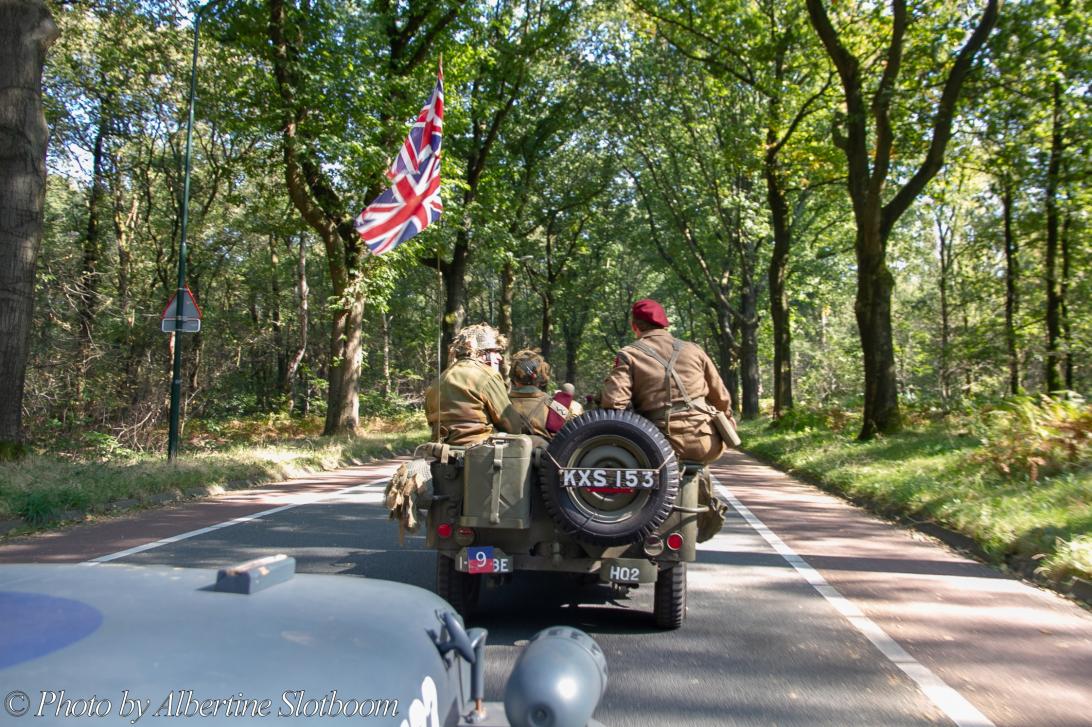
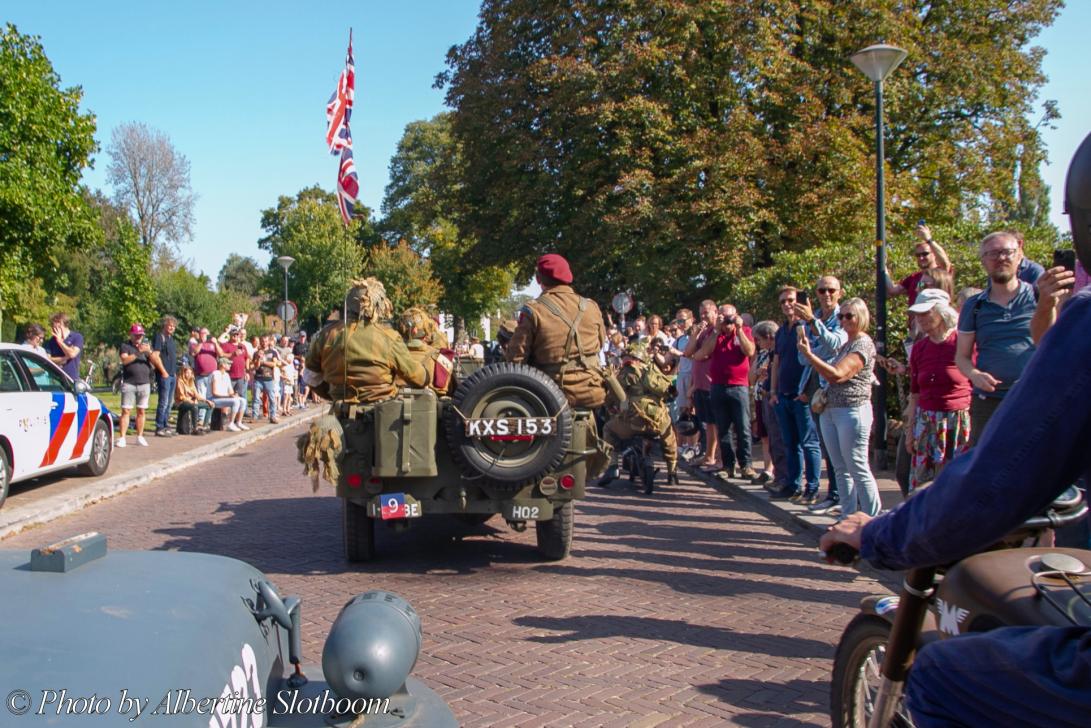
The 80th anniversary of the Battle of Arnhem: The Race to the Bridge 2024. A convoy of more than 200 WWII army vehicles followed the route Lieutenant-Colonel John Frost and his airborne troopers took in 1944 from the landing zones to the Rhine bridge in Arnhem. Only British-manufactured and British-used vehicles, along with Canadian WWII vehicles, were allowed to participate in the Race to the Bridge.

The 80th anniversary of the Battle of Arnhem: The Race to the Bridge 2024. The convoy of more than 200 WWII vehicles travelled from Renkum Heath, through the villages of Renkum, Heelsum, Doorwerth, and Oosterbeek towards the renowned John Frost Bridge in Arnhem. This imposing annual remembrance tour is organised by the Airborne Battle Wheels Oosterbeek (ABWO), a foundation established in 1996.

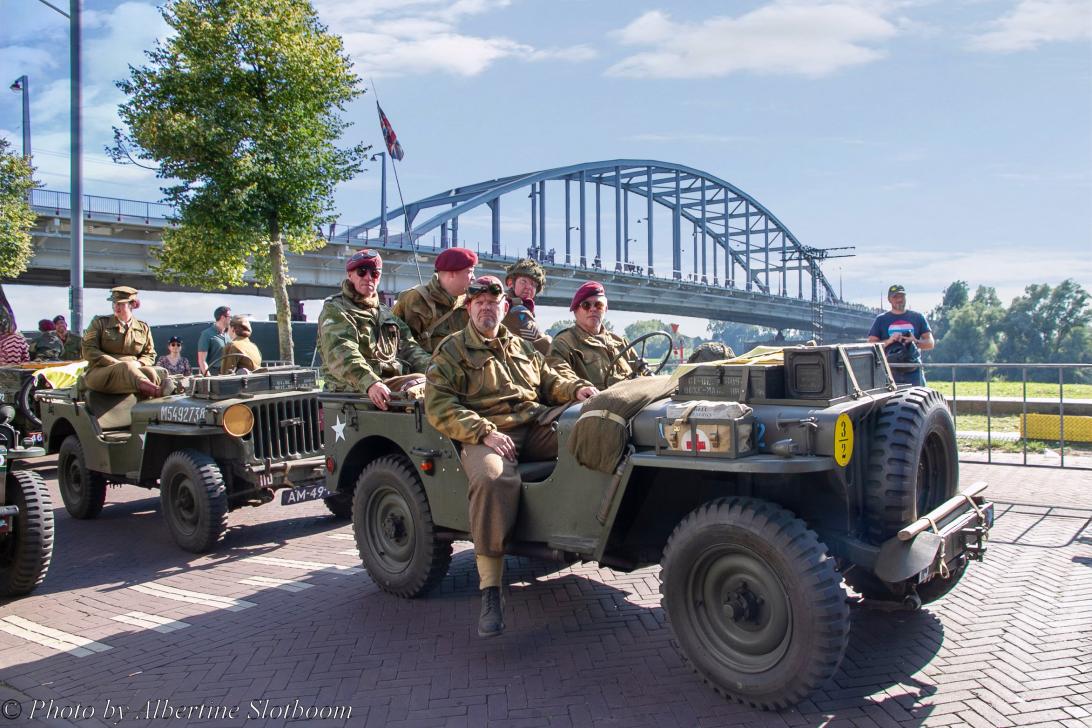
The 80th anniversary of the Battle of Arnhem, the memorial tour Race to the Bridge: WWII Jeeps in front of the John Frost Bridge in Arnhem. In 2024, eighty years after this historic battle in 1944, over two hundred WWII vehicles took part in the Race to the Bridge. In 1978, the Rhine bridge in Arnhem was renamed the John Frost Bridge, in honour of the distinguished leadership displayed by the commander of the 2nd Parachute Battalion during the Battle of Arnhem.